
What’s on the checklist
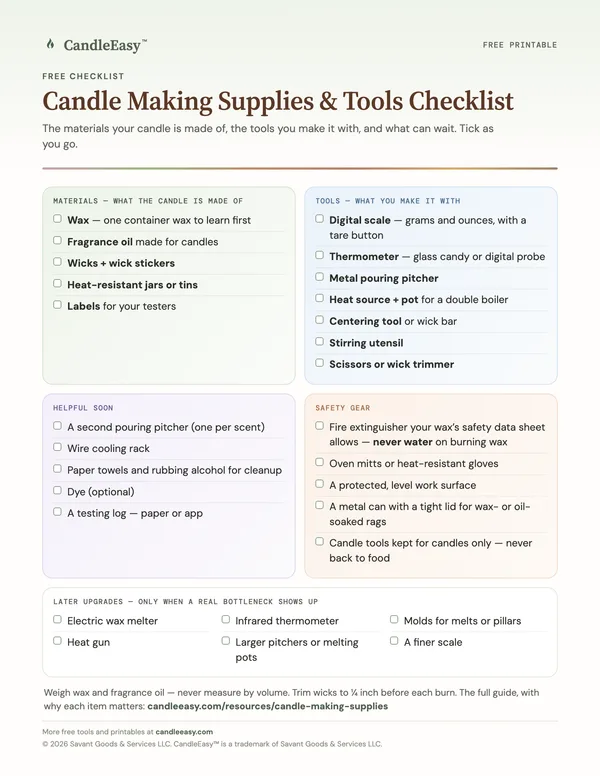
The sheet has five boxes. Materials are what ends up in the candle: wax, fragrance oil made for candles, wicks with wick stickers, heat-resistant jars or tins, and labels. Tools are what you make it with: a digital scale, a thermometer, a metal pouring pitcher, a heat source and pot for a double boiler, a centering tool, a stirring utensil and scissors or a wick trimmer.
Then come three shorter lists: what is helpful soon (a second pitcher, a cooling rack, cleanup supplies, a testing log), the safety gear to keep nearby, and the later upgrades that are worth buying only once a real bottleneck shows up.
Why a scale and a thermometer come first
Wax and fragrance oil are measured by weight, never by volume, because different waxes and oils have different densities. Fragrance load is a percent of the wax weight, so without a scale you cannot repeat a recipe. Look for one that reads in grams and ounces and has a tare button.
Wax makers publish the temperatures to heat to, add fragrance at and pour at. Those numbers only help if you can read them, so a thermometer sits right next to the scale on the list.
Start small on purpose
Pick one wax, one or two fragrance oils, one jar size and a few wick sizes to test. Changing many things at once makes it hard to learn what worked. The full guide explains why each item matters: Candle making supplies for beginners.
Common questions
What supplies do I need to start making candles?
Materials: wax, fragrance oil made for candles, wicks with wick stickers, heat-resistant jars or tins, and labels. Tools: a digital scale, a thermometer, a metal pouring pitcher, a heat source and pot for a double boiler, a centering tool, a stirring utensil and scissors or a wick trimmer.
What is the difference between candle making materials and tools?
Materials become part of the candle — wax, fragrance oil, wicks, jars and labels. Tools are what you use again and again to make it, like the scale, thermometer and pouring pitcher.
Do I need an electric wax melter to start?
No. A pouring pitcher in a pot of water on the stove works well. A melter is an upgrade once you pour regularly.
What safety gear should I keep nearby?
Oven mitts or heat-resistant gloves, a protected work surface, a metal can with a tight lid for wax- or oil-soaked rags, and a fire extinguisher your wax’s safety data sheet allows. Never use water on burning wax.
Is this checklist free?
Yes. Download the PDF and print as many copies as you like. No account and no email needed.